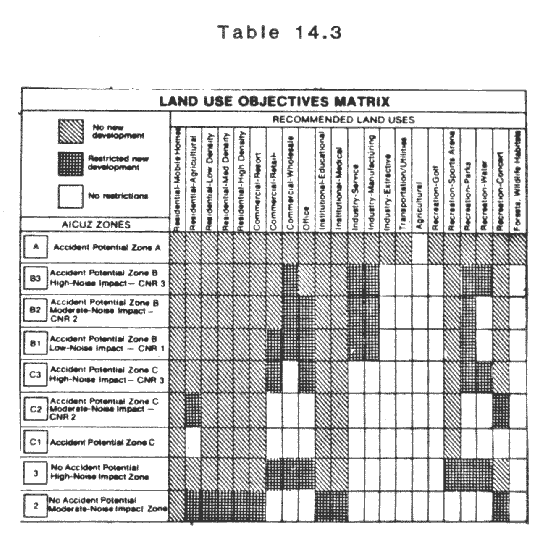
literature which relate AI levels, SIL and PSIL to levels of speech
intelligibility.
Table 6.1 is one example of such a table; it relates speech interference
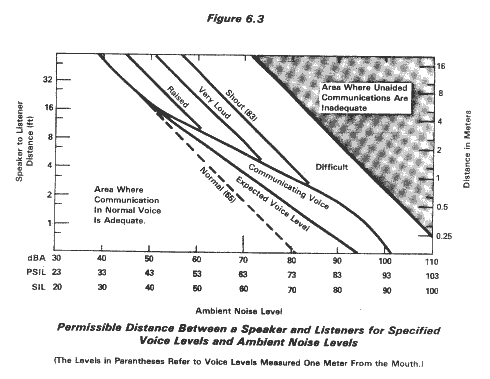
levels to levels of effective communication. Figure 6.3 provides the permissible
distance between a speaker and listeners for specified voice levels and ambient
noise levels, using AL (referred to in the table as dBA).
Another helpful
interpretive scheme has been developed by the U.S. Army, which has determined
through research and experience the levels of speech or sentence intelligibility
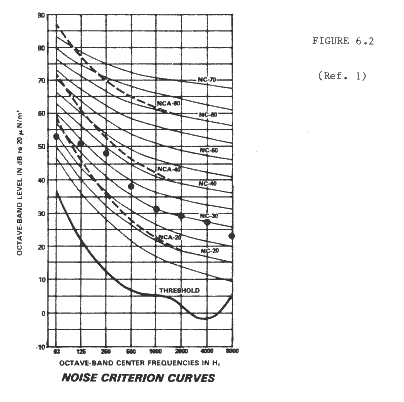
appropriate for various workspaces. Table 6.2 depicts
the relationship between NC values and speech quality.
6.4 SPEECH INTERFERENCE ON THE
GROUND
Speech interference associated with aircraft noise is a
primary source of annoyance to individuals on the ground. The disruption of
leisure activities such as listening to the radio, television, music and
conversation gives rise to frustration and irritation. Quality speech
communication is obviously also important in the classroom, office and
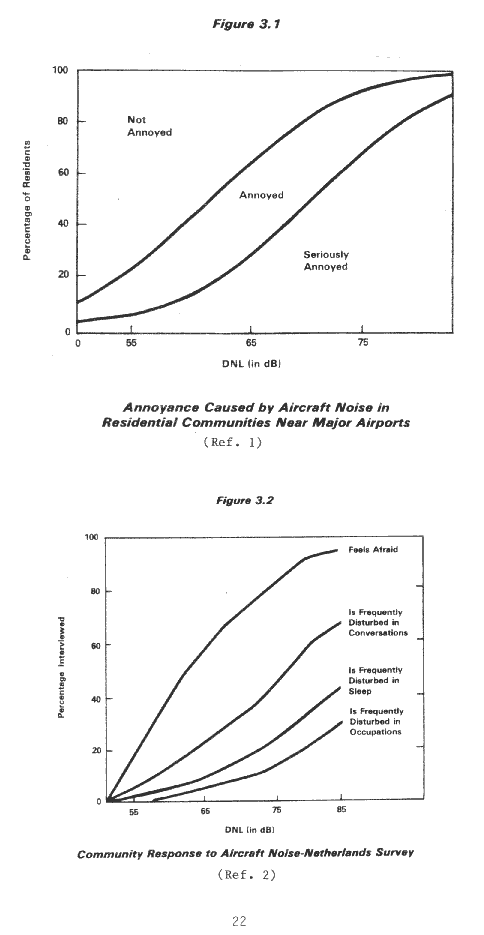
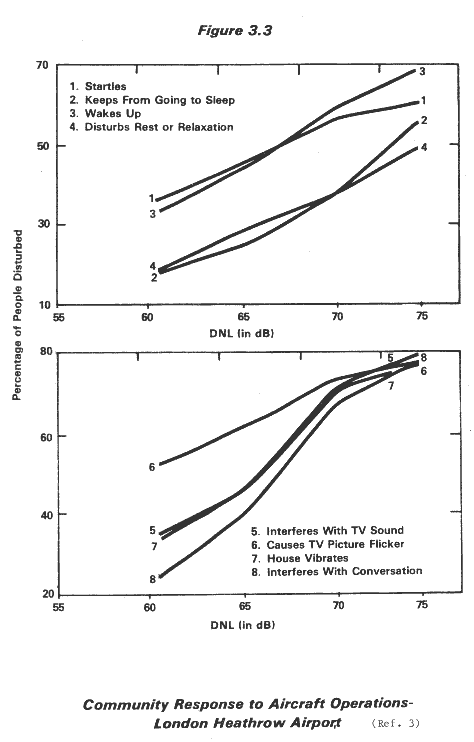
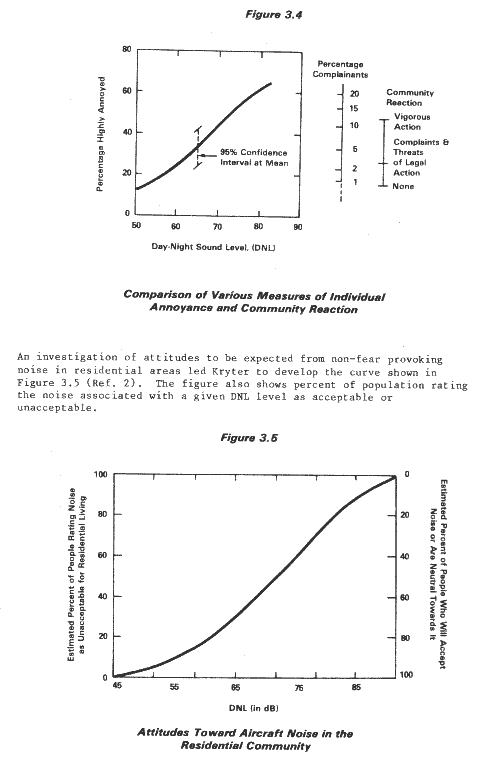
industrial settings. In one 1963 study, sponsored by the British government,
researchers found that aircraft noise of 75 dB annoyed the
Page 47
Top

48
Top
highest percentage of the population when it interfered with the television
sound (Ref. 3).
Eighty percent of the test population reported being annoyed. Also high on the
list of annoyances for the surveyed population was flickering of the television
picture and interference with casual conversation by aircraft
noise.
6.5 SPEECH INTERFERENCE IN THE
COCKPIT
The concern of cockpit speech intelligibility has been
addressed in recent years because of the potential safety hazard. In 1981 the
problem came to the forefront with the crash of a turboprop aircraft near
Spokane, Washington. The captain of the craft had complained earlier that "he
believed the cockpit noise levels precluded normal speech," and he concluded
that "the cockpit noise levels could have interfered with verbal communication"
(Ref. 4). The
National Transportation Safety Board (NTSB) concluded that during approach and
flight operations, the noise in the cockpit prevented effective verbal
communication (when headphones were not used). Consequently, the NTSB
recommended that the FAA consider publication of advisory information concerning
speech intelligibility in aircraft with particularly high cockpit sound levels.
The FAA responded to the NTSB'S recommendation for action with an advisory
circular which remains in draft form at the present time. Pertinent sections are
reproduced below (Ref. 5):
1.
Above a cockpit noise level of 88 dB(A), (PSIL = 78) efforts made to aid
communications by use of one or more of the methods discussed in the Advisory
Circular will significantly improve communication between crew members. (The
Circular discussed the use of well-fitted hearing protectors, noise-cancelling
microphones, and miniature headsets with circumaural muffs as possible methods
of increasing speech intelligibility.)
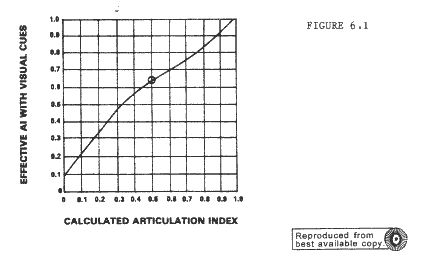
2. An Articulation Index of 0.3
was defined as equivalent to a PSIL 78 or 88 dB(A).
3. An Articulation
Index of 0.3 was, identified as adequate for acceptable communication. When
coupled with visual cues, this AI value relates to an intelligibility level of
97% in the known sentence test.
Page 49
Top
REFERENCES
1. Peterson, Arnold P.G. Handbook of Noise Measurement.
GenRad, Inc., 1980.
2. U.S. Air Force. Design
Note 3F1. January 1974.
3. Great Britain Committee
on the Problem of Noise. Noise, Final Report. Presented to Parliament by
the Lord Minister for Science by Command of Her majesty. London, H. M.
Stationery Office, July 1963.
4. Industrial Audiology.
Cockpit Communication Interference. FAA Order Number DTAFAO1-82-81561;
July 1982.
5. FAA Advisory Circular Draft on Cockpit
Speech Interference.
Page 50
Top
Section 7.0 SLEEP INTERFERENCE
SUMMARY
INTRODUCTION
This section describes the sleep process and
reviews research relating the percentage of an exposed population experiencing
awakening to noise level. Design criteria are also identified for avoiding
unacceptable rates of awakening.
AVIATION
APPLICATIONS/ISSUES
Sleep interference associated with aircraft
noise.
GUIDANCE/POLICY/EXPERIENCE
Sleep interference is one
of the factors contributing to aircraft noise annoyance. Airport nighttime
restrictions have been employed to minimize this annoyance. In the case of
nighttime operations an exterior maximum sound level (ALm) of 72 dB is
identified as an acceptable sleep interference threshold for windows closed
condition. This corresponds to an interior ALm of about 55 dB.
Page 51
Top
52
Top
7.1 INTRODUCTION
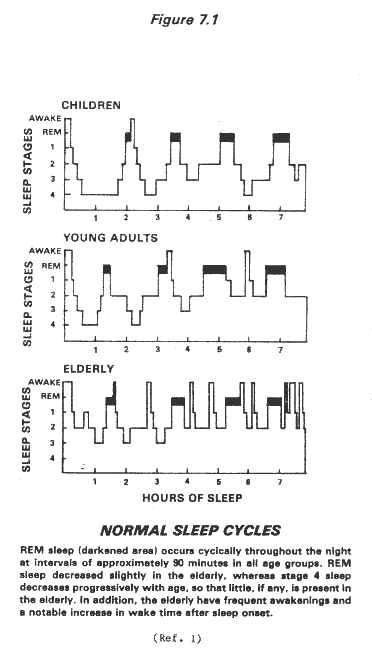
Sleep can be divided into
two stages: REM (rapid eye movement) and NREM (non-REM). NREM, the heavier
sleep, is further divided into four substages, the fourth of which is the
deepest sleep. The two stages (REM and NREM) appear throughout the night in
cycles, with REM sleep recurring in all ages at approximately 90 minute
intervals. The amount of time spent in stage 4 sleep, however, decreases
progressively with age. The elderly also have more occurrences of waking after
falling asleep than do younger people. Figure 7.1 is a
graph of these cycles (Ref.
1).
Sleep has been identified as having a number of beneficial
effects which any sleep interference can inhibit. These include the restorative
processes of body organs, the recovery of the brain from "fatigue", the
consolidation into memory of information gained during wakefulness, and, in
children, the release of growth hormones. Interestingly, sleep deprivation does
not appear to affect mental and psychomotor performance adversely. However, it
is a generally accepted conclusion that sleep is necessary for a healthy life,
so the question of to what extent noise can interfere with an individual's sleep
naturally arises.
7.2 SLEEP DISTURBANCE
RESPONSE
In most sleep research experiments, arousal is said to have
occurred when (1) within one minute of a noise stimulus, the subject's EEG
pattern changes to one of wakefulness, or (2) the subject gives some sort of
motor signal indicating he or she is awake. If the subject's EEG changes within
one minute of a noise stimulus but the change is normal for that sleep stage, an
0-reaction (meaning a reaction less than a change of one sleep stage) is said to
have taken place. Research has shown that fewer awakening reactions were found
in deep sleep than in light sleep, and that REM sleep provided more 0-reactions
than NREM sleep. Only relatively high exposure to aircraft noise could cause
arousal from substages 3 and 4 of NREM sleep.
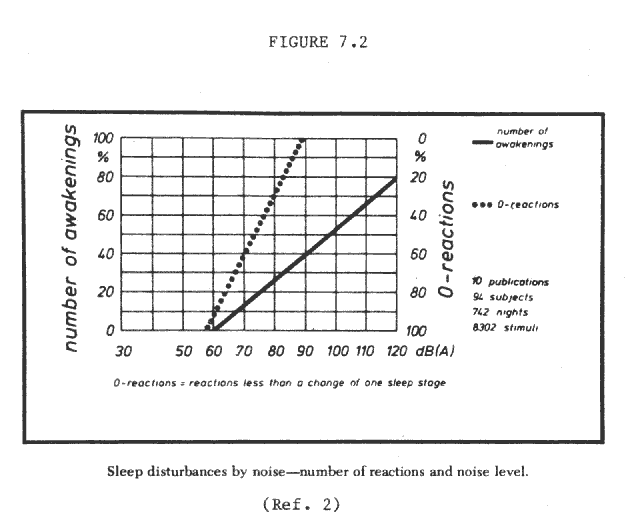
Figure 7.2 illustrates the
number of awakenings and 0-reactions which take place at different noise levels
(Ref. 2). The
figure represents a collation of ten publications involving 94 subjects and 742
nights of testing. The relationship illustrated in the figure provides the basis
for currently accepted policy that interior noise levels of up to 55 dBA are
acceptable.
7.3 RECENT LITERATURE
REVIEW
In 1983, the FAA requested NASA Langley Research Center to
review the literature and "state of the art" in sleep interference research.
This study was part of a larger reevaluation of weightings proposed for
nighttime noise events. The pertinent findings of this study are outlined below
(Ref. 3).
Page 53
Top
Ref
2
7.3.1 Arousal from Sleep. The study revealed
that, while research has yielded widely varying conclusions as to what the
threshold of arousal from sleep is, the level of a noise which can interfere
with falling or waking from sleep ranges from 35 to 70 dB. The varied results of
researchers arise because several factors affect how easily a person will be
awakened from sleep. As mentioned above, a person's age is a prominent factor
affecting arousal. Children sleep the heaviest, the elderly the lightest, sleep.
Thus, older people have a much lower , arousal threshold than do younger
people.
As one might expect, there is also a rise in the threshold of
arousal as sleep stages deepen. The average difference in the arousal threshold
from being awake to stage 4 NREH sleep is about 17.5 dB. Lastly, because of the
cyclical nature of the two sleep stages (REM and NREM), an individual's
susceptibility to arousal varies throughout the night. However, in a normal
8-hour sleep night, more time is spent in lighter stages of sleep in the last
half than in the first half. This implies that airport use restrictions limiting
early morning flight from 3 a.m. to 7 a.m. are particularly important. Although
people are also susceptible to arousal at the beginning of a sleep period when
they are just trying to fall asleep, in general arousal is more likely during
the late hours of sleep.
7.3.2 Measuring Sleep
Interference. Some studies have shown generally that the single event energy
dose of a noise event (EPNL or SEL), and not the maximum level (in PNL or AL) is
a better predictor of sleep interference (Refs. 4, 5). These
findings have been contradicted in a report by 0hrstrom and Rylander, who assert
that peak levels should be used to determine tolerable night levels of noise (Ref. 6).
Researchers continue to debate this question.
Page 54
Top
7.3.3 Adaptation. Studies conducted to
determine adaptation to the sleep arousal noise threshold over a number of
successive nights revealed only slight adaptation. Researchers speculate that
perhaps even this small degree of adaptation involved subjects' acclimatization
to the laboratory setting and instruments rather than to the
noise.
Another researcher found that subjects exposed to noise either 0,
6 or 24 times in one night demonstrated habituation during the night: The
subjects showed less arousal response on the nights when 24 stimuli were
presented than during 6-stimuli nights (Ref. 7). However,
subjects' morning performance was better following a 6-stimuli night than a
24-stimuli night despite increased average arousal. The value of habituation to
more frequent sleep disturbances in a given night is thus
questionable.
In an interesting but unusual study of infants near Osaka
airport (in Japan), it was determined that babies who were born of mothers
exposed intense aircraft noise before conception and/or during the first five
months of pregnancy had habituated themselves to aircraft noise below
approximately 90 dBA, although still reacting to music (the control sound) below
that level (Ref.
8). Babies having less or no "exposure" before birth to aircraft noise
reacted both to aircraft noise and to music below 90 dBA. While this particular
report suggested that the babies habituated during the first five months of
prenatal growth to a greater extent than the babies with less or no prenatal
exposure to aircraft noise, other researchers consider this conclusion "highly
speculative."
It is generally accepted that people adapt psychologically
to new environmental noises. This adaptation involves learning how often and
when environmental noises are likely to occur, and how to adjust behavior
patterns to prevent sleep arousal or other effects of noise. Research suggests
that adaptation to noise is a constant. In one study, for example, cessation of
aircraft landing operations between 11 PM and 6 AM at Los Angeles International
Airport had no appreciable effect on subjects' reports of sleep interference (Ref. 9).
7.4 1977 LITERATURE REVIEW
An earlier review of
sleep interference was also carried out under FAA support in 1977 as part of a
congressional mandate to assess the feasibility of soundproofing schools and
hospitals in the vicinity of airports (Ref. 10). Key
observations and conclusions from that study are provided below.
Although
the effects of noise on sleep are not completely understood, the noise
environment of a hospital area must be considered, because sleep is crucial to
patient recovery. A level of 40 dBA is a conservative estimate of the threshold
level of noise for sleep disturbance of patients in hospitals and public health
facilities. Noise exposure below this level is not expected to interfere with
sleep.
Page 55
Top
Ref
10
56
Top
Other studies have also attempted to set noise levels for sleep disturbance
and have basically supported this limit. The U.S. EPA set 35 dB as the
A-weighted disturbance level for a steady noise; it also concluded that single
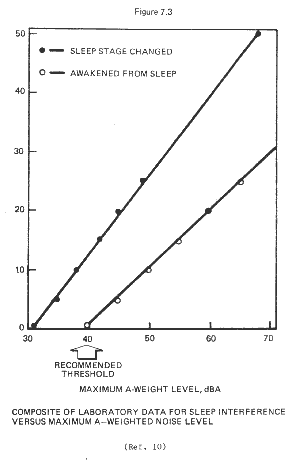
event maximum levels (ALm) of 40 dB result in a 5% probability of awakening. Figure 7.3 is a
composite of laboratory data for sleep interference versus maximum A-weighted
noise levels.
The recommended interior noise levels for hospitals and
sleeping environments was identified in the 1977 report as being between 34 and
47 dNA. A study conducted in patient rooms of eight hospitals revealed a
background noise level ranging from 35 to 60 dBA, and an average 24-hour level
of between 40 and 45 dBA. Aircraft noise effects in a hospital depend, of
course, on how high the background level is without aircraft noise, and the
intensity, duration, and frequency of noise disturbance from aircraft.
7.5 SUMMARY
In summary, the following conclusions
can be drawn from the research studies reviewed:
1. The threshold level
of a noise which will cause arousal from sleep depends on sleep stage and the
age of the subject, among other things. Noise levels which can cause sleep
disturbance cover a range of 35 to 70
dB (ALm).
2. Little or no
physiological adaptation to sleep interference from noise occurs, although
adaptation to new sleep environments does occur.
3. Psychological
annoyance from the effects of sleep interference from aircraft noise is probably
more significant than the direct physiological consequences.
4. The
recommended interior noise levels for hospitals is between 34 and 47 dB; for
other sleeping environments, the maximum acceptable intrusive level is 55 dB.
Page 57
Top
REFERENCES
1. Kales A, and J. Kales. Evaluation and Treatment of
Insomnia. New York, Oxford University Press, 1984.
2. Griefahn, Barbara. Research on Noise-Disturbed Sleep Since
1973. In Proceedings of the Third International Congress on Noise as a
Public Health Problem. ASHA Report No. 10, April 1980.
3. Kryter, Karl. D., Analysis of Laboratory and Field Data on
Awakening from Noise.
4.Lukas, J., Measures of
Noise Level: Their Relative Accuracy in Predicting Objective and Subjective
Responses to Noise During Sleep. EPA-600/1-7-010, U.S. Environ. Protect.,
Agency. Feb. 1977.
5. Horonjeff, R., R. Bennett, and
S. ________, Sleep Interference BBN Rpt. 3710 Dec. 1978, Electric Bower
Research Institute, Inc., Palo Alto, CA 94302.
6.
0hrstrom, E., and R. Rylander, Sleep Disturbance Effects of Traffic Noise - A
Laboratory Study on After Effects, J. Sound and Vib. Vol. 84, 1982,
pp. 87-103.
7. LeVere, T. G. Morlock and F. Hart,
Waking performance decrements following minimal sleep description: The
effects of habituation during sleep, Physiological Psychology, Vol.
3, 1975, pp. 147-174.
8. Ando, Y. and H. Hatton,
Effects of Noise on Sleep of Babies, J. Acoust. Soc. Am. Vol. 62,
1977, pp. 199-204.
9. Reported in Kryter, K. D.,
Community Annoyance from Aircraft and Ground Vehicle Noise, J. Acoust.
Soc. Am. Vol. 72, 1982, pp. 1222-1242.
10. Wyle
Labs, Res. Staff. Study of Soundproofing Public Buildings Near Airports.
Ref. No. DOT-FAA-AEQ-77-9, April 1977.
Page 58
Top
Section 8.0 NON-AUDITORY EFFECTS
SUMMARY
INTRODUCTION
This section summarizes a series of contemporary research
studies which hypothesize correlation between noise exposure in general (in many
cases aircraft noise exposure) and various human physiological or behavioral
effects. While some studies show a significant correlation, other studies show
none. Although research continues, there does not exist a succession of studies
which corroborate the "cause and effect" theory. While the reader should be
aware of research in this area, the topics reviewed in this section are
considered to be beyond the realm of normally accepted and recognized aircraft
noise effects.
AVIATION APPLICATION/ISSUES
1.
Cardiovascular effects
2. Achievement scores
3. Birth
weight
4. Mortality rates
5. Psychiatric
admissions
GUIDANCE/POLICY/EXPERIENCE
1. As cited above the
relationship between these suggested "effects" and aircraft noise has not been
repeatedly and consistently demonstrated. On the contrary, many studies directly
contradict those which show an effect.
Page 59
Top
8.1 INTRODUCTION
Frequently, statements
and claims are made that aviation noise damages the health of airport neighbors.
The fact that aircraft noise above a certain level annoys those neighbors is
generally accepted, but whether or not that noise causes any physical or mental
damage is far less established. This section briefly reviews the pertinent
reports and journal articles dealing with the non-auditory effects of aviation
on people.
8.2 INTERPRETATION OF
RULINGS
Section 611 of the Federal Aviation Act, as amended, requires
the Administrator of the FAA to prescribe and amend standards and regulations
"In order to afford present and future relief and protection to the public
health and welfare from aircraft noise..." There is no clear definition of
"public health and welfare" as used in this mandate. The U.S. EPA has
interpreted the phrase as "complete physical, mental and social well-being and
not merely the absence of disease and infirmity." (Ref. 1) More often,
"public health" is interpreted to cover physical or mental damage to individuals
and the public, as, for example, the loss of hearing acuity as a result of
exposure to high levels of noise. Correspondingly, "public welfare" is
interpreted to cover mental or emotional reaction to noise, often characterized
as annoyance or interference with a normal activity (speech, sleep or
solitude).
FAA's statutory mandate requires relief and protection from
both levels of impact, so that a clear distinction between the two effects is
largely academic. In many legal actions, however, a distinction may be sought in
order to place more emphasis and importance on "health" impacts than on possibly
less permanent "welfare" effects. Indeed, a 1982 decision by the U.S. Court of
Appeals held that the effects on people's psychological health and community
well-being should be included in an environmental impact statement associated
with the proposed restart of Three Mile Island Unit 1 (Ref. 2). A strict
interpretation of this decision could add comparable new assessments into many
aviation-related actions.
8.3 REVIEW OF
STUDIES
A brief review was carried out of available scientific
journal articles and reports dealing with possible health and welfare effects of
airport noise on residents of neighboring communities (Ref. 3). The
effects of aircraft noise on the physical, mental and emotional health of
airport neighbors (the so-called non-auditory effects) are not nearly so clear
as those for hearing loss. Most survey reports on this subject find that there
is little reliable evidence on the relationship between noise exposure and
mental or physical health. Although there are many studies available attempting
to relate these factors -- one study cites 150 references, another 83 -- most do
not employ scientifically rigorous methods or provide fully descriptive
information on which their validity can be judged. It is interesting to note
that a recent EPA-sponsored
Page 60
Top
survey judged only one study out of 83 to rate higher than "4"on a scale of
0 to 9, in terms of study quality (Ref. 3). Thus, in
general, it is difficult to prove -- or- disprove -- any connection between
mental or physical health and noise, and more particularly, airport
noise.
Three pairs of studies, included in this section, directly
contradict each other. One 1979 study apparently found a higher mortality rate
for residents near Los Angeles International Airport, compared with a lower
noise-exposure area (Ref. 5). A 1980
study used exactly the same data, and found that the mortality rates were nearly
identical. The latter analysis appears far more thorough and scientifically
valid (Ref.
6).
A 1978 study, which received national press coverage, apparently
showed a higher rate of birth defects for residents east of Los Angeles
International Airport, compared to the remainder of Los Angeles County (Ref. 7). A 1979
study reported exactly the same type of analysis around Atlanta's Hartsfield
International Airport, and found no significant differences in 17 categories of
birth defects for residents near the airport and those in quieter locales (Ref. 8). Again, the
second study appears far more rigorous and scientifically valid (but it
apparently received no press attention at all). A third pair of studies examined
mental hospital records in relation to airport residents, and also reached
different conclusions (Ref. 9, Ref.
10).
Perhaps the most striking set of studies concerning the effects
of airport noise on neighbors was that published in 1977 by Knipschild (Ref. 11 through
Ref. 14). These studies examined the incidences of cardiovascular problems,
doctor contacts, and drug purchases for areas near Amsterdam's Schiphol Airport,
and concluded that "airport noise, as prevalent around many airports,
constitutes a very serious threat to public health in all its aspects: affection
of well-being, mental disorders, somatic symptoms and diseases (especially
cardiovascular diseases)." The EPA-sponsored survey included one of these
studies, however, but did not seem to find it convincing. Incidentally, the
Knipschild studies have been cited in a recent court case and apparently was
considered important in that decision (Ref.
15).
8 4 SUMMARY
Although many
airport neighbors have claimed a direct health impact from aviation noise, there
is little valid scientific basis for such claims.
Page 61
Top
REFERENCES
1. U.S. Environmental Protection Agency, "Information on
Levels of Environmental Noise Requisite to Protect Public Health and Welfare
with an Adequate Margin of Safety," EPA 550/9-74-004, March 1974.
2. People Against Nuclear Energy v. U.S. Nuclear Regulatory
Commission U.S. Court of Appeals for the District of Columbia, May 14,
1982.
3. Wesler, John F. Unpublished Information Paper
on the Effects of Noise. Federal Aviation Administration, AEE-120, Washington,
D.C., 1981.
4. Thompson, "Epidemiology Feasibility
Study: Effects of Noise on the Cardiovascular System," EPA Report 550/9-81-103,
September 1981.
5. Meecham & Shaw, "Effects of Jet
Noise on Mortality Rates," British Journal of Audiology, Vol. 13,
1979.
6. Frerichs, Beeman & Coulson, "Los Angeles
Airport Noise and Mortality - Faulty Analysis and Public Policy," American
Journal of Public Health, Vol. 70, No. 4, April 1980.
7. Jones & Tauscher, "Residence Under an Airport Landing
Pattern as a Factor in Teratism," Archives of Environmental Health, Vol. 33,
1978.
8. Edmonds, Layde & Erickson, "Airport Noise and
Teratogenesis," Archives of Environmental Health, Vol. 34, pp. 243-247,
1979.
9. Meecham & Smith, "Effect of Jet Aircraft
Noise on Mental Hospital Admissions," British Journal of Audiology, Vol. ii, pp.
81-85, 1977.
10. Gattoni & Tarnopolsky, "Aircraft
Noise and Psychiatric Morbidity," Psychological Medicine, Vol. 3, pp. 516-520,
1973.
11. Knipschild, "V. Medical Effects of Aircraft
Noise: Community Cardiovascular Survey," International Archives of 0ccupational
and Environmental Health, Vol. 40, 1977.
12.
Knipschild, "VI. Medical Effects of Aircraft Noise: General Study,"
International Archives of 0ccupational and Environmental Health, Vol. 40,
1977.
13. Knipschild, "VII. Medical Effects of
Aircraft Noise: Drug Survey," International Archives of Occupational and
Environmental Health, Vol. 40, 1977.
14. Knipschild,
"VIII. Medical Effects of Aircraft Noise: Review and Literature," International
Archives of Occupational and Environmental Health, Vol. 40, 1977.
15. Charles Frances Davison et. al. v. Department of Defense
et. al., U.S. District Court for Southern District of Ohio, May 1982.
Page 62
Top
Section 9.0 EFFECTS OF NOISE ON WILD AND DOMESTICATED
ANIMALS
SUMMARY
INTRODUCTION
This section summarizes research concerning the
effects of aviation noise on wild mammals, birds and fish, on farm animals
(swine, cattle, poultry and mink), and on a variety of laboratory animals. While
a significant amount of research has been conducted on the reactions of animals
to noise, it has proven difficult to draw any general conclusions on the subject
because there is much variability in response both between and within species.
Thus, no clear policies or guidelines have been developed concerning noise
exposure and animals.
AVIATION APPLICATION/ISSUES
1. Harm
to animals in U.S, wildlife refuges, national parks, and wilderness
areas
2. Effects on the productivity of domestic
animals
GUIDANCE/POLICY/EXPERIENCE
Animals are rarely
exposed to high noise levels outside of the laboratory, and most have proven
impervious to the aircraft noise they do experience. Nevertheless, a few species
have demonstrated little tolerance of aircraft noise and have shown few signs of
adapting to it. Since no well-established guidelines concerning noise and
animals exist, it is important to remain aware of the issue and alert to the
possibility that "off-limits" wildlife areas may be desirable in the future for
selected wildlife areas.
Page 63
Top
64
Top
9.1 INTRODUCTION
The effects of aviation
noise on animals have been studied rather extensively over the past 20 years,
with much of the work being conducted by U.S. Air Force-sponsored researchers.
The studies have revealed that the effects are highly species-dependent and that
the degree of the effect may vary widely. Responses of animals to aircraft noise
vary from almost no reaction to virtually no tolerance of the sound. The
question of how adaptable animals are remains largely unanswered. Both wild and
domesticated animals have been studied, though more research has centered on
domesticated or laboratory animals (such as rats and mice). The research
summarized below reflects the extensive variation in the sensitivity and
response of animals to noise.
9.2
WILDLIFE
It has proven difficult to study the effects of aviation
noise on wild animals in their own environment and under natural conditions.
Yet, as urban areas of the U.S. continue to grow, protecting natural habitats
and their inhabitants thereof becomes a greater concern.
9.2.1 Birds. A test employing helicopters and other
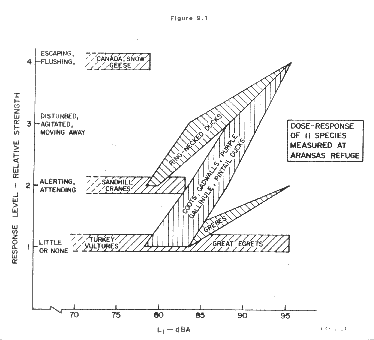
aircraft was conducted at Arkansas National Wildlife Refuge in Texas (Ref. 1). Eleven
different avian species were observed and their reactions gauged on a scale of 1
(no reaction) to 4 (violent reaction, left the area). Figure 9.1 depicts
the results of this study. Of the eleven species, five--Canadian and Snow Geese,
Sandhill Cranes, Turkey Vultures and Great Egrets--showed no change in response
as a function of helicopter noise level, while the other six species appeared to
alter their response depending upon the noise intensity. The grebes' response
increased only slightly while the response of ring-necked ducks, coots,
gadwalls, purple gallinules, and pintail ducks were found to increase more
strongly as a function of the helicopter noise level. Canadian and Snow Geese
did not tolerate helicopter noise at any level. The authors concluded that
because any tendency among the geese to adapt remains to be demonstrated,
"off-limits" areas may possibly be necessary for such sensitive
species.
9.2.2 Fish. Fish have been noted to
respond to noise within their environment such as underwater explosions and the
sound of fishing vessels; however, aircraft noise is very rarely a part of that
environment. Most airborne sound is reflected off the water's surface, with only
a small fraction actually penetrating the air-water boundary. The impact of
sonic boom on aquatic life has also been evaluated. When a sonic boom sweeps an
expanse of water, only the vicinity of the water surface is affected. The ICAO
Sonic Boom Committee, after conducting various tests, concluded that typical
sonic booms are not likely to harm aquatic life (Refs. 2, 3). Also,
the U.S. Department of the Interior, Bureau of Sport Fisheries and Wildlife
conducted a study of the effect of sonic boom on fish and fish eggs. Trout and
salmon eggs were reared in the normal manner until reaching the most critical
stage of development and then were exposed to sonic boom. Mortality rates for
the exposed eggs were compared with a control group. No mortality differential
was discernible (Ref. 4).
Page 65
Top
9.3 DOMESTICATED (FARM) ANIMALS
A 1963 study found that pigs exposed to recorded jet and propeller aircraft
sounds of 120 to 135 dB daily from 6 a.m. to 6 p.m. from weaning time or before,
until slaughter at 200 pounds body weight, showed no differences in feeding or
weight gain from pigs unexposed to the sounds (Ref.
5).
Another study also reported that dairy cattle showed no
differences in milk production when exposed to aircraft noise. The researchers
compared milk cow herds located within three miles of a number of air force
bases using jet aircraft (13 percent of the herds were within 1 mile of the end
of an active runway). Dairy cattle studied in the vicinity of Edwards Air Force
Base (California) showed few abnormal behavioral reactions due to sonic booms,
though they had been exposed to the booms for several years and so may have
become habituated (Ref. 6). Other
studies also supported this evidence that cattle are generally not affected by
the sonic boom or other aircraft noise.
Poultry have shown no more
reaction to aircraft noise than swine or cattle. In a 1958 study, recorded
aircraft flyover noise at 80 to 115 dB at 300 to 600 Hz was played daily and
every third night from the beginning of the hens brooding until the chicks were
9 weeks old. There resulted no difference in weight gain, feeding efficiency,
meat tenderness or yield, or mortality between sound-exposed and non-exposed
chicks (Ref. 7).
Broad breasted bronze turkeys were exposed to recordings of low flying jet
planes at l10 to 135 dB for 4 minutes during the third day of brooding. The
turkeys typically ceased brooding but resumed it shortly, with no decrease in
egg laying (Ref.
8). A final study showed that chicken eggs exposed to daily sonic booms for
21days during their incubation hatched normally (Ref. 9).
In
a 1968 study on mink, one hundred twenty animals were exposed to simulated sonic
booms ranging from 2.0 to 0.5 lb per sq ft. The litters of mink exposed to the
booms were larger than those of mink not exposed. No racing, squealing or other
signs of panic were observed in the animals. Animals that died naturally were
examined; no disorders which could be traced to the sonic booms were found (Ref. 10). Female
mink showed little or no response to exposure to sonic boom during breeding,
birth of kits, or whelping. Again, no signs of panic were observed.
9.4 LABORATORY ANIMALS
Mice, rats, monkeys, and
rabbits have been examined in numerous studies, the results of which are briefly
reviewed here (Ref.
11). The studies generally exposed the test animals to a certain level of
noise for a predetermined period of time; response was measured in terms of
physiological change. Increases and decreases in body chemicals and in the
weights of body organs were typically observed in the tests. Although some of
the bodily changes were typical of reactions to stress (and noise is often
considered stressful), it was not clear that the changes were significant or
dangerous. As with humans, hearing damage occurred when the animals were exposed
to high level noise; however, animals are rarely exposed to extreme aircraft
noise.
Page 66
Top
9.5 CONCLUSION
While instances may arise
in which aviation noise does create a concern for those protecting wildlife or
involved in animal husbandry, in general, aviation noise has a minimal impact on
animals.
REFERENCES
1. Edwards, Richard G., Alvin B. Broderson, Roger W.
Barbour et al. Assessment of the Environmental Compatibility of Differing
Helicopter Noise Certification Standards. U.S. Department of Transportation,
FAA, June 1979.
2. International Civil Aviation
0rganization, Sonic Boom Committee. Report. . First meeting, Montreal, ICAO Doc.
9011, SBC/1, May 1972.
3. International Civil Aviation
0rganization, Sonic Boom Committee. Report. Second meeting, Montreal, ICAO Doc.
9064, SBC/2, June 1973.
4. U.S. Department of
Transportation, FAA. Concorde Supersonic Transport Aircraft: Final
Environmental Impact Statement. Vol. 1, September 1975.
5. Bond, J. C.F. Winchester, L.E. Campbell, and J.C. Webb.
Effects of Loud Sound on the Physiology and Behavior of Swine. U.S.
Department of Agriculture, Agricultural Research Service Technical Bulletin, No.
1280.
6. Parker, J.B, and N.D. Bayley.
Investigations on Effects of Aircraft Sound on Milk Production of Dairy
Cattle, 1957-1958. U.S. Department of Agriculture, Agricultural Research
Service, Animal Husbandry Research Division, 1960.
7.
Stadelman, W.J. The Effects of Sounds of Varying Intensity on Hatchability of
Chicken Eggs. Poultry Science, 37, 1958.
8.
Jeannoutot, D.W. and J.L. Adams. Progesterone Versus Treatment by High
Intensity Sound as Methods of Controlling Broodiness in Broad Breasted Bronze
Turkeys. Poultry Science, 40, 1961.
9.
Bell, W.B. Animal Response to Sonic Boom. Paper presented at the 80th
meeting of the Acoustical Society of America, Houston, November 1970.
10. Travis, H.F., G.V. Richardson, J.R. Menear, and J. Bond.
The Effects of Simulated Sonic Booms on Reproduction and Behavior of
Farm-Raised Mink. ARS 44-200, U.S. Department of Agriculture, Agricultural
Research Service, June 1968.
Page 67
Top
Section 10.0 EFFECTS OF STRONG LOW FREQUENCY ACOUSTICAL
ENERGY
SUMMARY
INTRODUCTION
This section reviews the effects of strong low
frequency acoustical energy in creating some of the more unusual (albeit rare)
aircraft noise effects. The consideration of low frequency sound in creating
vibration (and secondary noise) in structures is discussed. While structural
vibration is not a common concern for commercial transport airplanes, there may
be some need to exercise caution in helicopter operations in close proximity to
buildings. A brief review is also provided addressing human physiological
reactions to intense low frequency sound as one might encounter near engine test
stands. Criteria are presented for both annoyance to vibration and human
physical damage risk for exposure to intense infrasound.
AVIATION
APPLICATIONS/ISSUES
1. Vibration of wall and windows
2.
Radiation of secondary noise
3. Human physiological response to intense
low frequency
sound
4. Sonic Booms (illegal in U.S, for civil
aircraft
operations)
GUIDANCE/POLICY/EXPERIENCE
The
issue of low frequency energy and its impact on buildings and people was
explored in detail in regard to the Concorde SST operations in the U.S. Impacts
were found to be negligible. Consequently low frequency effects from civil
commercial aircraft remains a minor issue in most environmental impact
assessments. There remains the need however to consider carefully possible
effects of low frequency energy in the operation of helicopters in close
proximity to buildings.
(Preceding page blank)
Page 69
Top
10.1 INTRODUCTION
The lower end of the
audible acoustical spectrum is approximately 20 Hz. Below this frequency people
cannot generally hear sound but can easily sense vibrations in their bodies.
Intense sound in this frequency range can also excite resonances in various body
cavities causing a feeling of nausea or discomfort. Intense infrasound can also
cause walls and floors to vibrate, rattling windows and household items. The
effects of this low frequency sound are discussed in this chapter.
10.2 STRUCTURAL EFFECTS
Potential damage to
building structures from low frequency sound vibration became a topic of concern
during the environmental assessment of the supersonic jet transport, the
Concorde. Subsequent studies revealed that low frequency vibration from the
Concorde causes little to no structural damage. Analyses conducted of five
historic sites near the proposed subsonic flight path of the Concorde aircraft
revealed breakage probabilities from noise-induced vibration for windows, brick
chimneys, a stone bridge, and a plaster ceiling to be less than .001 percent per
year (Ref. 1).
It was found that exposure to normal weather (such as thunder or wind loads)
produces a higher probability of breakage than vibrations from the
Concorde.
At Sully Plantation, Virginia, the test location nearest the
Concorde flight path and therefore most likely to sustain vibration damage,
calculations were based on a sound level of 104 dBA for each overflight, or an
effective pressure of .313 psf. Estimates of the probability of breakage of one
flight from Concorde overflights are about one in every million years. The
Concorde's contribution to the cumulative damage of a house in the neighborhood
of Kennedy Airport was found to be insignificant. Everyday vibrations from wind
and household activities were greater than those caused by aircraft in the worst
conditions around normal airports.
Studies show that the Concorde causes
five times the vibration to normal buildings as the older model Boeing 707 (with
JT3D engines) (Ref.
2). Considering the higher levels of noise produced by the Concorde in
relation to other aircraft, the danger of breakage from noise-induced vibration
at all frequencies is therefore slight.
10.3
ANNOYANCE WITH STRUCTURAL VIBRATION
It has also been theorized
that the vibrations induced in buildings and windows by low frequency sound
might increase the annoyance of the occupants to a greater degree than the
effects of the vibration on the human body. This annoyance is due to human
perception of the vibration of a wall or window and rattle created by household
objects when the structure vibrates. Infrasound characterized by long
wavelengths is not attenuated by walls, partitions, acoustic absorbers, or the
atmosphere to the same degree as audible sound.
U.S. Army researchers
conducted a study to measure the role of vibration and rattle in human response
to helicopter noise (Ref. 3).
Helicopter noise annoyance was judged against annoyance from a control noise by
Page 70
Top
subjects in the living-dining area of a frame farmhouse, in a mobile home,
and outdoors. Subjects in the living-dining area of the house were most annoyed
by vibration and rattle; results suggest that, when high levels of vibration and
rattle are present, a control noise would have to be 20 dB higher than the
helicopter noise to produce equivalent annoyance. This offset was 3 to 6 dB
outdoors with an average of 4 1/2 dB. Subjects in the mobile home, most likely
because of the low frequency resonance created by the helicopter, display a 3 to
14 dB offset with an average of about 8 dB. The researchers concluded that
vibration and rattle can significantly increase the annoyance associated with a
particular sound level.
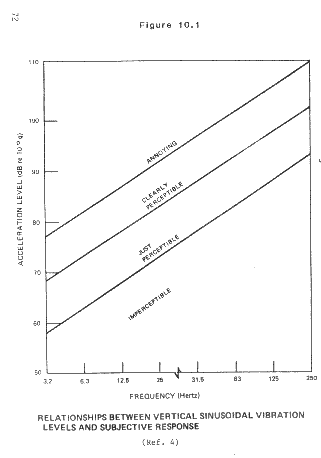
Reiher and Meister conducted an investigation of
subjective human response to different levels of structural vibration, and used
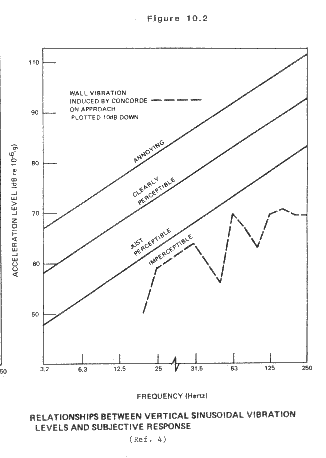
this data to develop the tolerance criteria shown in Figure 10.1 (Ref. 4). Their
study revealed that, when compared with these criteria, wall vibration caused by
takeoff and approach of the Concorde are imperceptible or barely perceptible,
causing no adverse effects on human beings (See Figure
10.2).
10.4 PHYSIOLOGICAL
EFFECTS
Low frequency sound can be directly absorbed through the
surface of the body and can excite sense organs other than the ears. The effect
is similar to the effect of mechanical vibration on the body, causing the
internal organs to vibrate and disturbing the nervous system, digestion and
sight. Most physiological effects of vibration and noise are limited to a narrow
frequency range. Very intense low frequency noise (0-20 Hz) can cause a
sensation of vibration, disequilibrium, motion sickness, speech disturbance, and
blurring of vision, just to name a few. Frequencies from 5-9 Hz have been shown
to affect the liver, spleen, and stomach, while somewhat higher frequencies may
result in mouth, throat, bladder or rectal pain.
Workers in extremely
noisy situations complain of distraction from nausea, disequilibrium,
disorientation, headache, lassitude, and blurring of vision. French workers have
reported disorders of the circulatory and nervous systems as a result of
exposure to infrasound, but the presence of permanent effects on the body has
not been verified (Ref. 5).
Industrial equipment often produces inaudible vibrations which, after prolonged
exposure, cause specific complaints of giddiness, nausea, and anxiety not found
after similar exposure to noise in the audible range.
10.5 CRITERIA FOR INTENSE LOW FREQUENCY SOUND
(INAUDIBLE),
INFRASOUND
10.5.1 EPA
Levels Document. According to the EPA Levels Document extremely high levels
of infrasound can cause mild stress reactions and such unusual auditory
sensations as pulsating or fluttering (Ref. 5). The
threshold for these symptoms is about 120 dB sound pressure level in the 1-16
Hertz range. The EPA sees no serious health hazard in infrasound intensities
where the sound pressure level is below 130 dB. To consider a
Page 71
Top
Ref 4
Ref
4
72
Top
worst case example, the Concorde supersonic transport creates sound pressure
levels at low frequencies (below 30 Hz) which are well below EPA sensation and
damage risk levels. All other commercial transport levels fall below those of
the Concorde, indicating no potential health effects associated with low
frequency noise from in-service commercial aircraft.
10.5.2 International Standards 0rganization (ISO).
Generally, human tolerance of vibration is lowest in the 4-8 Hz frequency
range, and this is the basis of limits proposed by the ISO Technical Committee
108 working Group. Human tolerance to vibration also depends on situational
factors; for example, the blurring of vision which is merely an annoyance to a
train passenger could impair safety and efficiency in the workplace. It is also
not known to what extent non-auditory sensations of noise are symptoms of
psychological stress.
10.6 SONIC BOOM
FAA flight rules require
civil aircraft to fly at subsonic speed over U.S. land areas in order to prevent
sonic booms from impacting the U.S. environment. For supersonic aircraft
approaching or leaving U.S. boundaries, flight rules stipulate that the aircraft
be operated in a manner that will not cause direct sonic shock waves to encroach
upon the U.S. (Ref. 6).
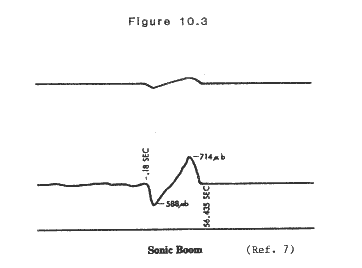
Sonic booms result when a projectile such as an
aircraft exceed the speed of sound. The phenomenon we call a boom is similar in
many ways to an explosion, characterized by a rapid increase in pressure above
the ambient pressure, followed by a negative pressure excursion. An example of
this N-wave signature is shown in Figure 10.3.
Ref
7
A great deal of research was conducted in the1950's and 1960's by the U.S.
Air Force and prospective manufacturers of the an American SST. (The U.S. SST
program was eventually cancelled). The relationships
Page 73
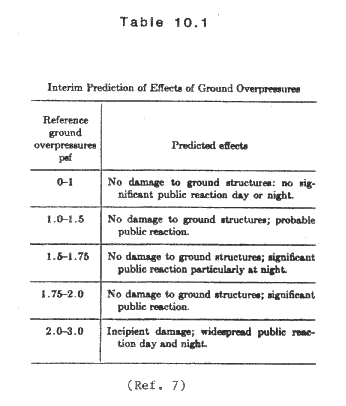
Top
between sonic boom overpressures and resulting damage and community response
are presented in Table 10.1 (Ref. 7). One
publication concludes "The human reaction to shock wave noise has been fairly
well correlated. It has been concluded that 1.0 pound per square foot
(overpressure) will cause no damage to ground structures and no significant
public reaction day or night."
Ref
7
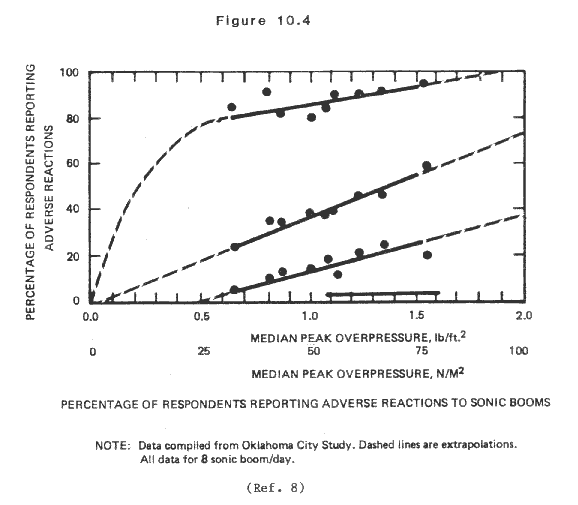
One of the most famous studies on the sonic boom was conducted in 1964 over
Oklahoma City (Ref.
8). Eight sonic booms a day at a median peak overpressure level of 1.2 psf
(57.46 pascals) were experienced by this community over a six-month period. Figure 10.4,
below, reveals the percentage of responding residents who reported adverse
reactions to the sonic booms. Based on this and many other studies, the U.S. EPA
has stated that "the peak overpressure of a sonic boom that occurs during the
day should be no more than 35.91 pascals (0.75 psf) if the population is not to
be annoyed or the general health and welfare adversely affected " (Ref. 9).
As
a matter of interest, a rather unusual phenomenon called secondary sonic booms
were observed shortly after the introduction of Concorde service to the U.S. In
essence, sonic shock waves from the Concorde were refracting off the
discontinuity at the top of the earth's atmosphere and bending back down to the
earth, l4hile the level of the overpressures was not high enough to cause any
damage, people did take notice. After a study of these "mystery booms" by the
FAA / DOT (Ref.
10), the Concorde pilots implemented changes in their operational procedures
to minimize the occurrences.
Page 74
Top
 Ref 8
Ref 8
10.7 CONCLUSION
As discussed in this
section, low frequency sound and its effects are relatively minor considerations
in assessing aircraft nose impact. The case of helicopter operations in close
proximity to buildings, however, remains an area warranting close scrutiny.
Page 75
Top
REFERENCES
1. Hershey, Robert L., Russ J. Kevala, and Sharon L.
Burns. Analysis of the Effect of Concorde Aircraft Noise on Historic
Structures. Rep. No. FAA-RD-75-118, July 1975.
2.
Wiggins, John H. The Influence of Concorde Noise on Structural
Vibrations. Rep. No. FAA-75-1241-1, July 1975.
3.
Schomer, Paul. The Role of Vibration and Rattle in Human Response to
Helicopter Noise. Unpublished Report, December 1986.
4. Douglas Aircraft Company, Long Beach CA. Sonic Boom
Modeling Investigation of Topographical and Atmospheric Effects. Final
Report, FAA-NO-70-l0, July 1970.
5. U.S.
Environmental Protection Agency, Office of Noise Abatement and Control,
Washington D.C. Information on Levels of Environmental Noise Requisite to
Protect Public Health and Welfare with an Adequate Margin of Safety. March
1976.
6. Code of Federal Regulations, FAR
91.55.
7. Federal Aviation Administration, Office of
Planning. Some Considerations of Sonic Boom. May 1961.
8. Borsky, P.N. Community Reactions to Sonic Booms in the
Oklahoma City Area. National Opinion Research Center, AHRL-TR-65-37,
1965.
9. U.S. Environmental Protection Agency.
Information on Levels of Environmental Noise Requisite to Protect Public
Health and Welfare with an Adequate Margin of Safety. 550/9-74-004, March
1976.
10. Rickley, Edward J, and Allan D. Pierce.
Detection and Assessment of Secondary Sonic Boom in New England.
FAA-AEE-80-22, May 1980.
Page 76
Top
Section 11.0 IMPULSIVE NOISE
SUMMARY
INTRODUCTION
Over the past 10 years, researchers in aviation
acoustics have suggested that penalties be assessed (dB increments added) for
sounds which possess impulsive characteristics. Helicopter blade slap which
accompanies certain modes of flight operation has been the primary subject of
this research. This section reviews the research. and, as elsewhere, finds
conflicting results. While some researchers find the need for an adjustment
others do not. Complex distinctions between detectability and annoyance are key
to the debate. In the end, the position adopted by the International Civil
Aviation Organization (ICAO) was that no correction is necessary.. Nonetheless,
the Helicopter Association International (HAT), and the FAA continue to conduct
research to minimize impulsive helicopter noise.
AVIATION
APPLICATION/ISSUES
The question is raised, in connection with
helicopter noise, whether or not an impulsivity correction is necessary to
properly assess human
reaction.
GUIDANCE/POLICY/EXPERIENCE
After years of
research, ICAO concluded that an impulsivity adjustment was unnecessary to
properly certificate aircraft; this, in effect, implies that human response is
adequately assessed without a special impulsivity adjustment to the EPNL metric.
Nonetheless efforts continue to reduce impulsive noise which dominates
helicopter noise in certain flight regimes.
Page 77
Top
11.1 INTRODUCTION
During the past ten
years, a great deal of research was devoted to evaluating the need for a
correction factor or term to account for possible increased annoyance associated
with highly impulsive acoustical noise events. The main focus of this activity
has been impulsive helicopter noise which occurs during specific operational
flight regimes, primarily high speed level flight and particular descent modes.
This impulsive sound is sometimes characterized as slapping or banging. These
research concerns were driven by the need to develop an adequate metric for use
in a proposed international helicopter noise certification standard.
11.2 REVIEIW OF STUDIES
The findings of many
studies concluded that the currently used aircraft noise certification metric,
EPNL, did an adequate job of quantifying human annoyance response to impulsive
helicopter noise events. The studies briefly synopsized below found, for the
most part, that no adjustment would be needed to the EPNL metric to account for
impulsiveness.
11.2.1 1977 French Report.
In a 1977 report, French researchers concluded that impulsive noise is up to 6
dB more annoying than non-impulsive noise (Ref. 1). They had
carried out an evaluation of impulsive noise using subjects who compared pairs
of non-impulsive and impulsive noises. Pulse duration, type, degree, level and
repetition frequency were all considered; the degree of impulsivity, or the
magnitude of impulsive compared with non-impulsive noise, seemed to have the
most influence on the subjects' responses.
11.2.2
1977 U.S. Army Report. The U.S. Army Medical Research Laboratory also
issued a report in 1977 which addressed the issue of a penalty for impulsive
noise (Ref. 2).
In their test, subjects listened to a fixed wing aircraft as it passed overhead,
then rated each flyover of a rotary-wing aircraft relative to the fixed-wing.
Although the Army stated in the conclusion of its report that a 2 dB penalty for
helicopters was suggested by their results, they asserted that "no correction
for blade slap was found which improves the prediction of annoyance."
11.2.3 1978 NASA Report. In 1978 NASA sponsored a
field study of helicopter blade slap noise. (Ref. 3). Subjects
in this study, located both indoors and out, judged the noisiness of two
helicopters and a propeller-driven airplane during controlled flyovers. One
helicopter was operated to provide several levels of blade slap (impulsiveness);
the other varied little in impulsiveness. Among the results of the study was the
finding that, for equal EPNL, the more impulsive helicopter was consistently
judged less noisy than the less impulsive helicopter. The report published from
this study concluded that no significant improvement in the "noisiness
predictive ability of EPNL" was provided by a crest impulsiveness
correction.
11.2.4 1981 United Kingdom
Paper. In December of 1981, researchers of the United Kingdom presented a
paper to the ICAO Committee on Aircraft
Page 78
Top
Noise which supports the conclusions of the U.S. Army and NASA. (Ref. 4). These
researchers found that a proposed impulsive correction does not make EPNL a
better annoyance predictor; in fact, the opposite seems to hold true.
11.3 CONCLUSION
There is no need for a separate
impulse correction to existing noise metrics to adequately quantify annoyance
with helicopter noise. While efforts to reduce impulsive noise continues,
research indicates that more detectable sounds are not necessarily more
annoying.
REFERENCES
1. Wright, S.E, and A. Damongeot. Psychoacoustic
Studies of Impulsive Noise. Paper #55, Third European Rotorcraft Powered
Lift Aircraft Forum, Aeronautical and Astronautical Association of France,
September 1971.
2. Patterson, James, Ben T. Mizo,
Paul D. Schemer, Robert T, Camp. Subjective Ratings of Annoyance Produced by
Rotary-Wind Aircraft Noise. U.S. Army Aeromedical Research Laboratory,
Report No. 77-12. May 1977.
3. Powell, Clemans A.
A Subjective Field Study of Helicopter Blade-Slap Noise. NSA Technical
memorandum 78758, July 1978.
4. Loughborough
University of Technology. Studies of Helicopter Noise Perception: Background
Information Paper. ICAD Committee on Aircraft Noise, Working Group B,
December 1981.
Page 79
Top
Section 12.0 TIME OF DAY WEIGHTINGS FOR AIRCRAFT
NOISE
SUMMARY
INTRODUCTION
The issue of whether noise occurring at different
times of the day should be assigned weighting factors to represent different
human sensitivity to noise intrusion has been a subject of much concern and
research over the past 35 years. This section briefly reviews the research and
practice. The metric selected by the FAA as the standard for use in airport
noise impact assessment uses a 10 dB nighttime weighting
factor.
AVIATION APPLICATON/ISSUES
1. Should aircraft noise
occurring in the evening or at nighttime be assigned a weighting penalty to
account for increased sensitivity to noise intrusions?
2. If a weighting
is appropriate, what is the value of the weighting
function?
GUIDANCE/POLICY/EXPERIENCE
The FAA has designated
the Yearly Average Day Night Sound Level as the metric for assessing airport
cumulative noise impact. This metric assigns a 10 dB weighting between the hours
of 10 p.m. and 7 a.m.
(Preceding page blank)
Page 81
Top
12.1 HISTORICAL BACKGROUND
12.1.1 CNR. The question of time-of-day first
gained attention around 1951, when the Composite Noise Rating (CNR) scheme was
developed. This method attempted to relate the noise and attributes of a
community to a method which would estimate community response to aircraft noise.
The CNR considered the background, or ambient noise level as well as just
aircraft noise at night. The CNR penalized aircraft noise 5 dB just because it
occurred at night, and another 5 dB because the background noise decreases about
5 dB at night. This reasoning has remained constant, in part forming an
historical basis for the FAA's decision to penalize nighttime noise 10 dB.
Later, revisions were made to the CNR, but in each case the 10 dB nighttime
penalty was retained.
12.1.2 NNI. Another
system of measuring noise differences was the British Noise and Number Index
(NNI). This index, when reduced to similar terms as the CNR, indicated an 11 dB
penalty for nighttime noise, a value comparable to the 10 dB in use.
12.1.3 NEF. In 1967, yet another measure was
developed -- the Noise Exposure Forecast (NEF). NEF was the first measure which
was derived from the effective perceived noise level (EPNL). The NEF imposed a
12.2 dB adjustment for nighttime noise events. The 12.2 dB adjustment
corresponds to a nighttime multiplier of 16.7.
Several other methods of
measuring the noise around airports were pursued, but eventually the FAA and
much of the community that deals with noise settled on the day/night average
sound level (DNL) as the accepted measure. Using this measure, the 10 dB penalty
for nighttime noise remains intact.
12.2 REVIEW
OF THE CHOICE OF DNL
The choice of DNL as the "accepted" time of day
metric was extensively examined at a workshop held at NASA Langley Research
Center in 1980. (Ref. 1) There was
much comment on the validity of DNL. One discussion group pointed out that the
10 dB penalty of the DNL was borrowed from earlier cumulative noise measures
which were based on limited data and intuitive judgments. Many current studies
suggest that people may actually be more sensitive to noise in the evening
rather than late at night, other conference members asked whether the penalty of
10 dB was a valid number clearly related to community response or if it merely
indicates that nighttime noise is less desirable than daytime noise.
The
merits and deficiencies of the DNL metric were also examined. Table 12.1,
relates the outcome of that discussion.
Page 82
Top
Table 12.1
|
|
|
|
Accepted by all levels of
government
Accepted
internationally
Used to assess all community
noise
sources
Relates to Leq--generally
accepted for hearing
loss
assessment
Allows one to relate exposure
to
instantaneous rms level and
single event level
Correlates well
with human
response
Nighttime penalty looks
reasonable with
regard to
range of data
Ability to account for more
than
annoyance puts an
adequate weight on other
health
effects
Quantifies dose as a single
number
|
Energy summation method
sometimes yields bizarre
results with
nighttime
weighting factor. Lacks
uniform confidence in
the
scientific community
Hides some value judgments
from the user
Ignores time of week and
seasonal variations
Not known if the 10dB
penalty is truly
representative of
all
effects
Not known if the time
periods of application or
the magnitude of
the
penalty are valid |
Various recommendations were offered by conference participants concerning
DNL. The representatives of several governmental agencies spoke in favor of
maintaining agreement between Federal agencies as to what metric to use; they
also stated a desire to have that metric be one that is applicable to all kinds
of noise, (i.e. traffic, background, aircraft) which DNL is. Other
recommendations from conference discussion groups and individuals included the
following:
1. Researchers were urged to reconsider changing lifestyles
and to reflect on whether 10 PM to 7 AM is the most sensitive portion of the
day. Evening or transition may be more important.
2. DNL should remain a
rough screening device. The DNL penalty, for example, could impact school
operations if a large number of operations were shifted to the day. The public
is urged to pursue local independent decisions on this matter.
Page 83
Top
3. several individuals suggested removing the nighttime weighting altogether
and displaying day/night and weekend/seasonal information separately, using the
Leq metric for the respective time periods.
4. DNL is intended to measure
annoyance, not health, effects. However, any new nighttime penalty should
perhaps consider sleep disturbance, speech interference and other
effects.
The consensus of the conference groups seemed to be that, given
its long history, its current wide acceptance and use, and the fact that there
has been no strong alternative offered by research to date, DNL should remain
the "accepted" measure.
12.3 STUDY
RESULTS
As was noted by the NASA Langley Workshop discussed above,
the nighttime noise penalty was derived intuitively - researchers assumed that
nighttime noise is more disturbing to people than daytime noise. While there are
a few studies that do support this assumption, many others present conflicting
or contradictory views. A recent report sponsored by NASA Langley/FAA summarized
conflicting report findings on time of day considerations (Ref.
2).
The many reports on time of day have revealed a number of
variables that make it difficult (if not impossible) to make a clear statement
about when noise is most annoying. For instance, various studies have found
that:
- people report at least one awakening per night regardless of the presence
or absence of noise
- actual sleep disturbance and people's report of sleep disturbance is
weakly related
- people's reported annoyance/disturbance did not decrease after actual
flights were reduced.
- People's age and sex both seem to partially determine how much and how
easily a person is awakened at night.
There is also the possibility that people's perception of and annoyance
with daytime noise affects their perception of nighttime noise, some researchers
feel that there may be more complaints about nighttime noise because people view
it as a more valid complaint than something like television disruption; thus,
the perspective on time-of-day may be skewed. One study suggested that daytime
activities, which usually involve communicating or concentrating tasks, might be
more sensitive to interruption than sleep.
The report stated that the one
point that researchers seem to agree on -- although again, empirical evidence is
scant -- is that the most annoying/disturbing times for noise to occur are when
a person is trying to go to sleep and when he is preparing to awaken. However,
bedtime
Page 84
Top
varies greatly for people; it could be anywhere from 9:30 p.m. to 12:30 a.m.
Thus it is hard to designate a specific time that is the most disturbing for
aircraft noise to occur. The NASA Langley/FAA report concluded that no solid
conclusion could be drawn about the suitability of present time-of-day
models.
In addition to social surveys which attempt to determine people's
nighttime annoyance with noise, a few studies have been conducted on the ambient
noise level and its relationship to aircraft noise. The findings, once again,
appear to be contradictory. Some studies (Ref. 3) seem to
suggest that with higher background noise, annoyance with aircraft noise will be
greater, while others suggest (Ref. 4) that there
is little or no correlation between annoyance and ambient noise. Thus, no firm
conclusion may be drawn concerning ambient levels and aircraft
noise.
12.4 CONCLUSION
After
fifteen years of use, the DNL has shown itself to be a workable tool for the
noise community. Its use as the accepted measure in time of day considerations,
with its nighttime penalty of 10 dB between 10 p.m. and 7 p.m., will continue
unless future research can suggest a reasonable alternative.
REFERENCES
1. Workshop Proceedings, NASA Langley Research Center.
Time of Day Corrections to Aircraft Noise Metrics. Rep. No. FAA-EE-80-3,
March 1980.
2. Fields, James M. Research on the
Effect of Noise at Different Times of Day: Models, Methods and Findings.
Unpublished Report, August 1984.
3. Pearson, K.
S. The Effects of Duration and Background Noise level on Perceived
Noisiness. FAA ADS-78, Federal Aviation Administration, April
1966.
4. Taylor S. M., F. L. Hall and S. E. Bernie.
?Effect of Background Levels on community Responses to Aircraft Noise,
J. Sound & Vib, Vol. 71, No. 2, July 22, 1980.
Page 85
Top
Section 13.0 NOISE CONTOURS
SUMMARY
INTRODUCTION
Noise contours or footprints are the accepted
technique for displaying airport cumulative noise exposure. Noise contours are
also employed in comparing the noise footprints of individual aircraft. Contours
can be developed for different noise indices, but airport contours generally
express DNL while individual aircraft contours usually portray either SEL, EPNL
or ALm.
AVIATION APPLICATION/ISSUES
1. Contours are
used as the tool to assess land use compatibility.
2. Contours are also
used to portray the noise exposure of single operations of various aircraft
types.
GUIDANCE/POLICY/EXPERIENCE
The noise contour
program developed by the FAA and approved for use in FAA funded airport land use
compatibility studies is the Integrated Noise Model or INM. This program can
also generate single event contours. A new microcomputer-based model which will
generate noise contours for helicopters is now under
development.
(Precedinq page blank)
Page 87
Top
88
Top
13.1 INTRODUCTION
The principal tool for
analyzing land use compatibility in the vicinity of airports and heliports is
the noise footprint or contour. The noise contour represents a line of equal
exposure. Noise exposure is expressed using the yearly average day-night sound
level, DNL expressed in decibels.
The noise contours are generated using
a computer simulation of the yearly average daily operations. The computer
program developed for this purpose by the FAA is known as the Integrated Noise
Model, or INM. This program has traditionally run on a mainframe computer, but
is now available on at least two microcomputers (IBM XT and AT). In addition to
the INM, the FAA is presently involved in developing a microcomputer-based
Heliport Noise Model (HNM).
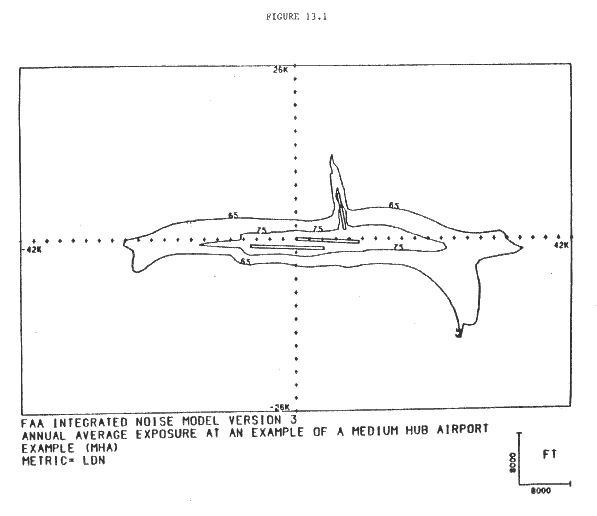
Noise contours are usually presented as
overlays on 1" = 2000 feet U.S. Geological Survey quarter sectional maps. This
allows easy identification of land use categories and surface references. Figure 13.1
displays the standard INM test case noise contour.
Information on noise
contours is available from the FAA. Reports on the use of FAA-approved noise
contour methodology include:
Flythe, M. C., "INM Integrated Noise Model,
Version 3 User's Guide," FAA-EE-81-17, October 1982.
Federal Aviation
Administration, "INM Integrated Noise Model, Version 3--Installation
Instruction," October 1982.
Connor, T. L. and D. N. Fortescue, "Area
Equivalent Method on VISICALC@," FAA-EE-84-8, February 1984.
Warren, D.
G., "Area Equivalent Method on LOTUS 1-2-3," FAA-EE-81-12, July 1984.
To
acquire any of these noise impact models or for any additional information,
contact:
FAA office of Environment and Energy
Noise Technology
Branch
AEE-120
ATTN: Tom Connor or Donna Warren
800 Independence
Avenue
Washington, D.C. 20591
13.2 THE
USES AND INTERPRETATION OF NOISE CONTOURS
The uses of the noise
contour include compatibility planning and parametric studies of airport
operations such as:
Page 89
Top
1) variation in aircraft ground tracks
2) departure profiles
3) aircraft
mix
4) introduction of new aircraft
5) changes in numbers of operations,
and
6) introduction of new runways
13.3
APPLICATION AND INTERPRETATION OF NOISE CONTOURS
13.3.1 DNL 65 Contour. Noise contours provide the
important guidance necessary to make sensible zoning and planning decisions,
avoiding incompatible land use in areas of high noise levels. Noise contours,
especially at lower levels, can be visualized as somewhat fuzzy bands which
become more and more discrete and sharp as the exposure level increases. For
example, a DNL 55 contour would be rather fuzzy, while a 75 DNL line would be
sharply in focus. In effect, the confidence one has in a noise contour and its
interpretation increases as the exposure level increases. It is therefore
worthwhile to review the strengths and potential weakness of noise contours in
representing noise impact.
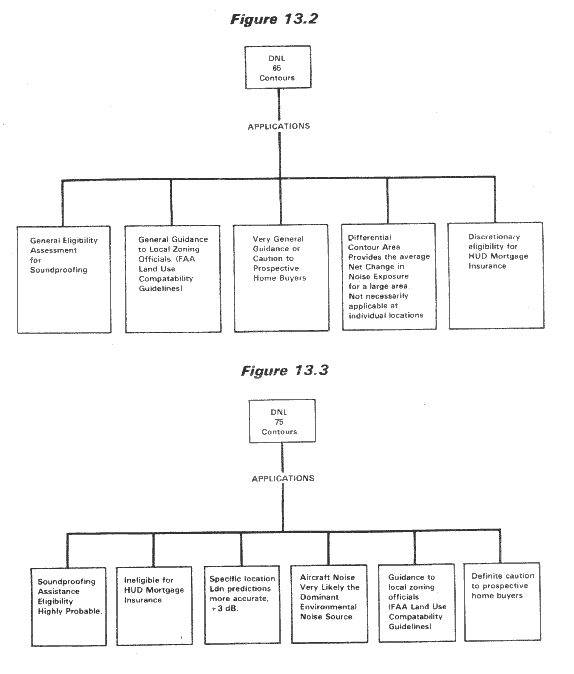
The applications of the DNL 65 contour are
diagrammed in Figure 13.2 and
are outlined below. The cautions previously alluded to are also set out below.
It is worth noting that these qualifications simply identify possible
misinterpretations and do not detract from the important general planning
strengths.
Applications
1. Soundproofing may be required to
achieve desired sound levels for certain building uses.
2. Conflicts may
exist between certain land uses and predicted noise exposure as set out in FAA
compatible Land Use Guidelines.
3. General caution is offered to
prospective home buyers.
4. Contour provides average net change, but may
not be applicable at individual locations.
5. Homes within the contour
may not be eligible for HUD mortgage insurance
(discretionary).
Precautions
1. It is most important to
emphasize that the DNL 65 contour does not form a boundary line between
acceptable and unacceptable noise exposure.
2. Locations within contours
do not necessarily require soundproofing nor are public buildings within
contours automatically eligible for soundproofing assistance;
Page 90
Top
91
Top
3. DNL contours or grid analyses do not accurately reflect noise exposure at
specific locations. Predicted levels may vary +/- 5 dB around actual measured
levels for any given location.
4. Other noise sources in the environment
may contribute as much or more than aircraft to the total noise exposure at a
specific location.
13.3.2 DNL 75 Contour.
The DNL 75 contour is often considered the boundary between high (75) and
moderate (65 - 75) noise exposure. The following interpretations are appropriate
for those areas within DNL 75 contours:
1. Soundproofing is very likely
required in many buildings (depending on use).
2. Homes are ineligible
for HUD mortgage insurance.
3. Aircraft noise is very likely the dominant
environmental noise source.
4. DNL prediction accuracy at specific
locations improves to + /- 3 dB.
5. Conflicts very likely exist between
predicted DNL values and land uses as set out in FAA Land Use Compatibility
Guidelines.
6. Definite caution is offered to prospective home
buyers.
Figure 13.3
diagrams these applications of DNL 75 contours. It is recommended that
perspective home buyers be firmly advised of the above conditions.
Page 92
Top
Section 14.0
AIRPORT NOISE EXPOSURE AND LAND USE
COMPATIBILITY
SUMMARY
INTRODUCTION
This section describes the development of criteria
linking cumulative airport noise exposure and compatible land use. Criteria are
presented which have been designated for use in FAA funded compatibility
studies.
AVIATION APPLICATION/ISSUES
1. FAR PART 150,
Airport Noise Compatibility Programs
2. Planning guidance for developers
and zoning officials.
3. Guidance for the granting of HUD and VA
mortgage
guarantees.
4. Airport master plans.
5. Environmental
Impact Assessments
GUIDANCE/POLICY/EXPERIENCE
The FAA
has published criteria in FAR PART 150 for use in compatibility studies. Other
similar criteria have been published by the Department of Defense, the Federal
Interagency Committee on Urban Noise, and the American National Standards
Institute (ANSI).
Page 93
Top
14.1 INTRODUCTION
Throughout the past 25
years, architects, engineers, planners, and zoning officials have developed and
employed a variety of land use noise exposure guidelines. Regardless of the
particular set of guidelines selected, there is always a range of noise exposure
levels associated with a given land use. The relative position of the
compatibility interval is arbitrarily defined, usually within 5 to 10 dB of some
absolute level. The non-exact, fuzzy-edged nature of compatibility intervals is
important to note in application of land use guidelines. Land use guidelines are
a planning tool and as such provide general indications as to whether particular
land uses are appropriate for certain measured noise exposure levels. The FAA
has elected to use criteria based on
(1) Federal Interagency Committee on
Urban Noise: Guidelines for Considering Noise in Land use Planning and Control,
and
(2) American National Standard Institute (ANSI) publication, "Sound
Level Descriptions for Determination of Compatible Land Use (ANSI
S3.23-1980)
for establishing airport noise land use compatibility
guidelines (Ref.
1). In making compatibility decisions, noise contours are generally used as
guidelines; Section 13.0
discusses applications of DNL contours.
14.2
FAA FAR PART 150 GUIDELINES
In FAR Part 150, the FAA has
identified land uses which are normally compatible (or noncompatible) with
various exposures of individuals to noise (Ref. 1). This was
done in compliance with the Aviation Safety and Noise Abatement Act of 1979 and
is the criteria for use in preparing Airport Noise Exposure Maps and Airport
Noise Compatibility Programs submitted under FAR Part 150. All Federal grants
issued after Fiscal Year 1986 for noise compatibility planning or development at
airports must be in accordance with FAR Part 150. This table is a refinement of
Federal and International noise/land use compatibility criteria and is
compatible with criteria used by other Federal agencies. It is the only
noise/land use compatibility table in the U.S. Code of Federal Regulations (CFR)
(14 Cm 150). The Part 150 Table is also compatible in most essential areas with
the table published by the American National Standards Institute (ANSI). Table 14.1
offers sample comparisons of the Part 150 table and the ANSI table.
Table 14.2
reproduces the FAA land use table (Ref. 2). (The
categories of this table are detailed further in FAA Advisory Circular
150/5020-1.). In addition to FAA and ANSI guidelines, other land use
compatibility tables have also been developed.
Page 94
Top
TABLE 14.1
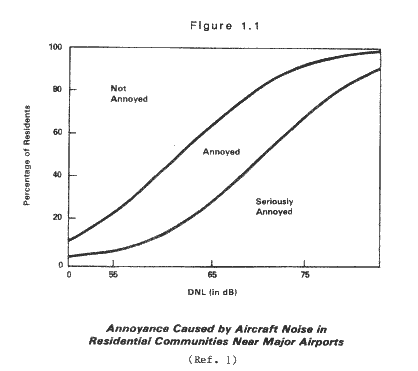 _ Ref 1